
Tanzanite — The Rarest Modern Gemstone
Tanzanite is one of the most extraordinary gemstone discoveries of the twentieth century. Found exclusively in a small mining area near Mount Kilimanjaro in northern Tanzania, it is estimated to be 1,000 times rarer than diamond in geological occurrence. Its unique blue-violet saturation and remarkable optical behavior have positioned it among the most coveted collector stones of the modern era.

Geological Formation
Tanzanite is the blue to violet variety of the mineral zoisite. It formed approximately 585 million years ago under unique tectonic and metamorphic conditions. The gemstone owes its coloration to trace amounts of vanadium within its crystal structure.
Unlike many gemstones that are found in multiple global locations, tanzanite exists in only one small geological deposit measuring just a few kilometers in length. This exclusivity significantly enhances its rarity and long-term value.
Pleochroism — A Unique Optical Signature
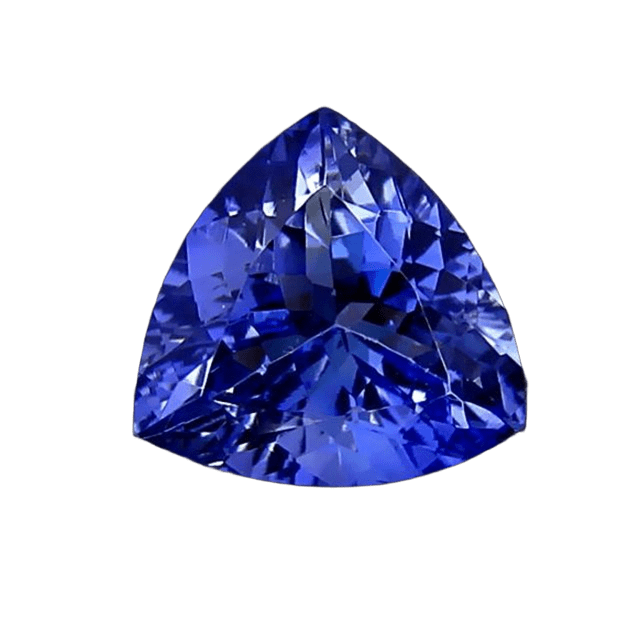
One of tanzanite’s most defining characteristics is its strong trichroism. When viewed from different angles, the stone may display blue, violet, and burgundy tones. Expert cutting is required to orient the crystal properly and emphasize the most desirable blue-violet hue.
Heat treatment is commonly applied to remove brownish undertones, intensifying the gemstone’s vivid coloration while preserving its natural composition.
Physical Properties
• Hardness: 6 to 7 on the Mohs scale
• Crystal System: Orthorhombic
• Refractive Index: 1.69 – 1.70
• Cleavage: Perfect in one direction
Due to its cleavage characteristics, tanzanite requires careful handling and protective settings when used in fine jewelry. Despite this, its brilliance and saturation make it one of the most visually arresting gemstones available today.
Investment & Rarity
With a single known source and diminishing mining yields, tanzanite represents a finite geological phenomenon. Industry experts widely acknowledge that once the Tanzanian deposit is exhausted, no comparable source is expected to emerge.
For collectors and investors alike, tanzanite embodies modern rarity — a gemstone with both geological limitation and aesthetic intensity.
Cultural & Commercial Recognition
Discovered in 1967, tanzanite rapidly gained international recognition through luxury jewelers and global exhibitions. Its rich coloration and exclusivity have secured its position among the world’s most desirable contemporary gemstones.
Few gemstones combine such geological uniqueness, limited origin, and striking optical performance in a single mineral specimen.